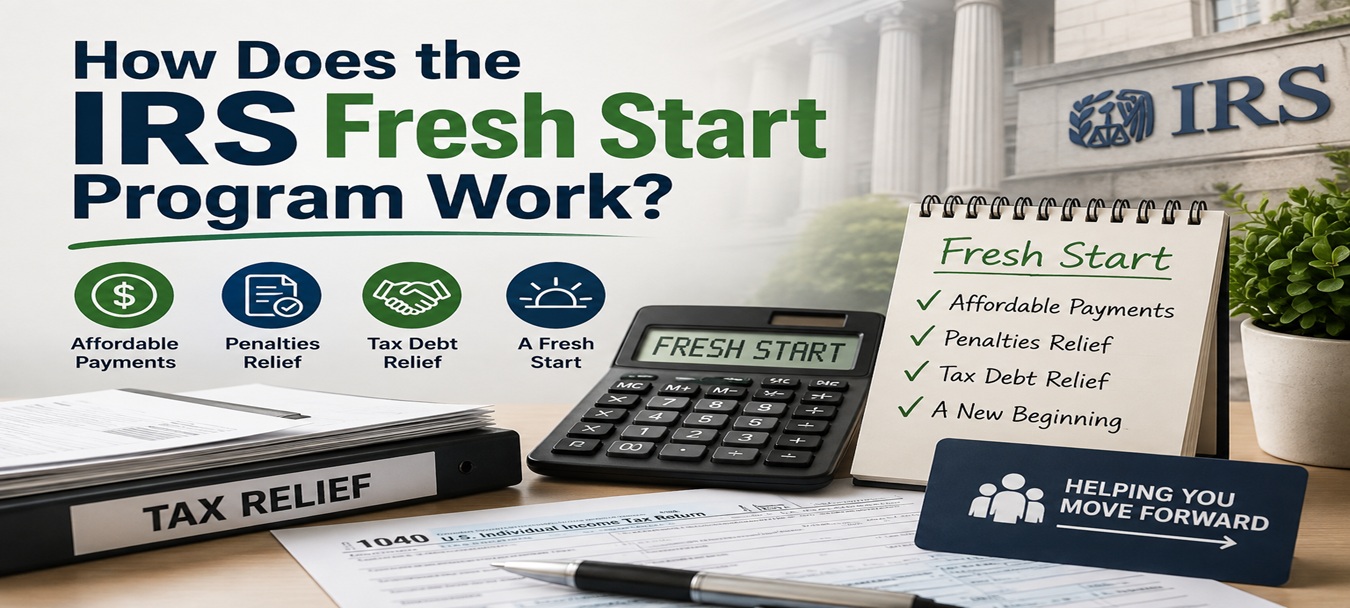
If you owe money to the IRS, you may have heard about the IRS Fresh Start Program and wondered whether it can reduce your tax debt or make your payments more manageable.
The IRS Fresh Start Program is not a single application or one-time tax debt forgiveness program. Instead, “Fresh Start” generally refers to a collection of IRS changes and initiatives that expanded or streamlined certain options for taxpayers who are struggling to pay their federal tax obligations.
Depending on your financial circumstances, available solutions may include an IRS payment plan, penalty relief, or an IRS Offer in Compromise. The right option depends on factors such as how much you owe, your income, assets, expenses, filing history, and ability to pay.
This guide explains how the IRS Fresh Start Program works, who may qualify, how to apply, common mistakes to avoid, and when professional assistance may be useful.
How Does the IRS Fresh Start Program Work?
The IRS Fresh Start initiatives are designed to help qualifying taxpayers resolve federal tax debt through more manageable collection options.
Rather than automatically eliminating tax debt, the program can make certain IRS resolution options more accessible.
The process generally looks like this:
Determine your total IRS tax liability.
Make sure required tax returns are filed.
Review your financial situation.
Determine which IRS resolution option may apply.
Submit the appropriate application or request.
Provide supporting financial information when required.
Follow the terms of an approved arrangement.
The important point is that there is no universal Fresh Start benefit that every taxpayer receives. The IRS evaluates taxpayers according to the requirements of the particular program or collection option.
What Tax Relief Options Are Available Under Fresh Start?
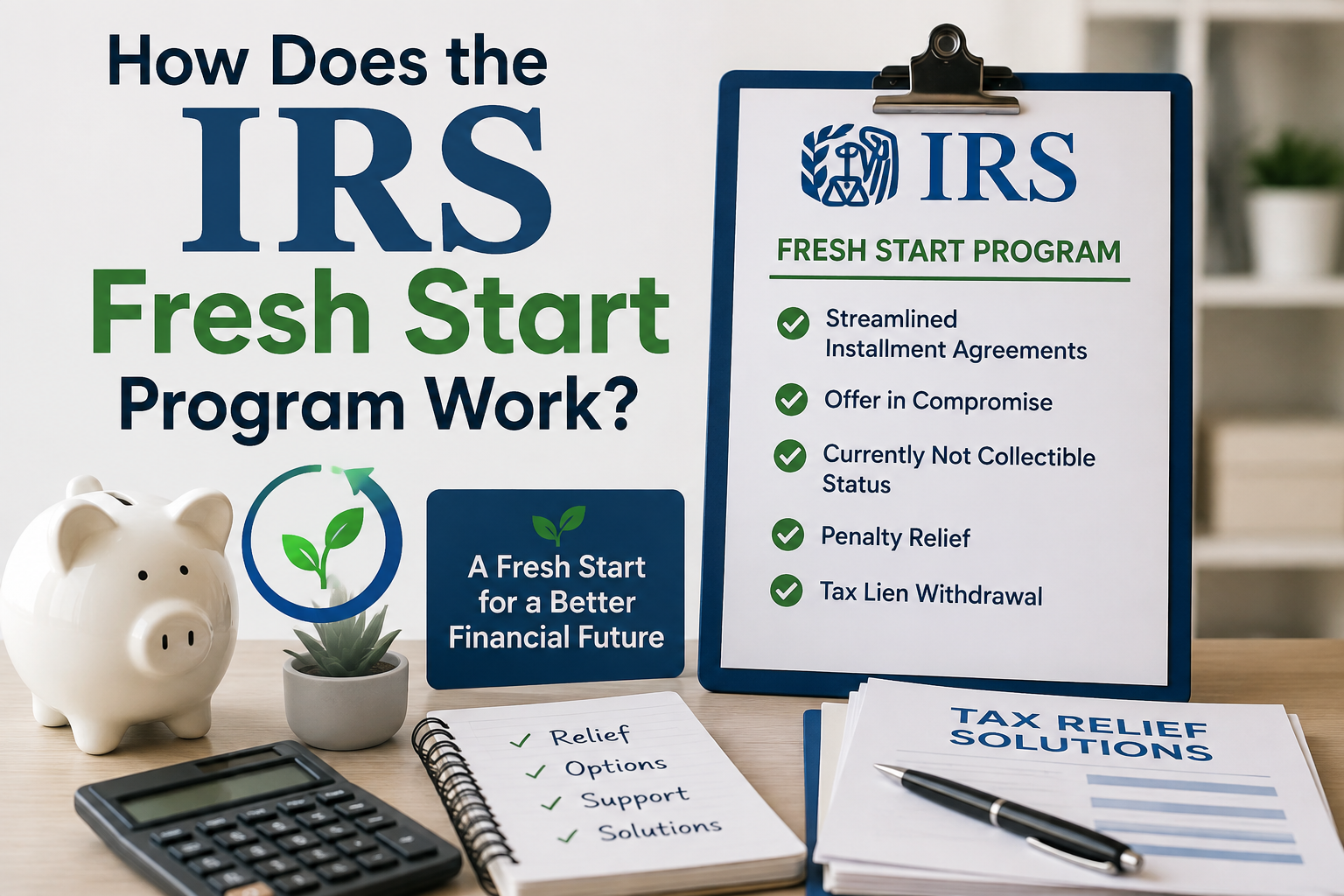
The Fresh Start initiatives are associated with several IRS collection alternatives. The appropriate option depends on the taxpayer's circumstances.
1. IRS Payment Plans
An installment agreement allows an eligible taxpayer to pay an IRS liability over time rather than paying the entire balance immediately.
Depending on the circumstances, taxpayers may be able to establish a short-term or long-term payment arrangement.
A payment plan can be useful when:
You owe more than you can afford to pay immediately.
You have regular income.
You can make affordable monthly payments.
You want to avoid a large lump-sum payment.
Example: Suppose a taxpayer owes $18,000 in federal taxes but has enough monthly income to make consistent payments. Instead of attempting to pay the entire balance immediately, the taxpayer may explore whether an installment agreement is appropriate.
Keep in mind that interest and certain penalties can continue to accrue until the balance is paid.
2. IRS Offer in Compromise
An IRS Offer in Compromise may allow a qualifying taxpayer to settle certain tax liabilities for less than the full amount owed.
However, it is important to understand that an Offer in Compromise is not automatic tax forgiveness.
The IRS generally evaluates factors such as:
Income
Expenses
Assets
Equity
Ability to pay
Future earning potential
Tax compliance
The IRS must determine that the proposed settlement meets applicable requirements before accepting the offer.
Practical tip: Don't assume that simply owing a large amount means you qualify for an Offer in Compromise. Your overall financial situation matters.
3. Penalty Relief
Some taxpayers may qualify for penalty relief depending on the circumstances.
For example, the IRS may consider certain requests involving reasonable cause or other applicable penalty-relief provisions.
A taxpayer who has received penalties should determine:
Which penalties were assessed
Why they were assessed
Whether the taxpayer qualifies for a particular relief provision
What documentation may be necessary
Penalty relief is different from eliminating the underlying tax liability.
4. Currently Not Collectible Status
A taxpayer who cannot pay basic living expenses while also satisfying an IRS liability may potentially qualify for Currently Not Collectible (CNC) status.
If approved, IRS collection activity may be temporarily suspended. However, CNC status does not necessarily erase the debt.
The IRS may review the taxpayer's financial situation again, and penalties and interest can continue to accrue.
Who May Qualify for IRS Fresh Start Options?
There isn't one universal income or debt threshold that determines whether someone “qualifies for Fresh Start.”
Eligibility depends on the specific IRS option being considered.
Factors can include:
Amount of tax debt
Filing compliance
Current income
Household expenses
Bank accounts and investments
Real estate
Vehicles and other assets
Business interests
Previous IRS agreements
Ability to pay
Collection statute considerations
Your Tax Returns Generally Need to Be Up to Date
One of the biggest mistakes taxpayers make is trying to negotiate tax debt before addressing missing tax returns.
If you have unfiled returns, resolving the filing problem may need to happen before pursuing certain collection alternatives.
Tip: Gather copies of your tax returns, IRS notices, income records, and financial statements before beginning the resolution process.
How to Apply for IRS Fresh Start Tax Relief
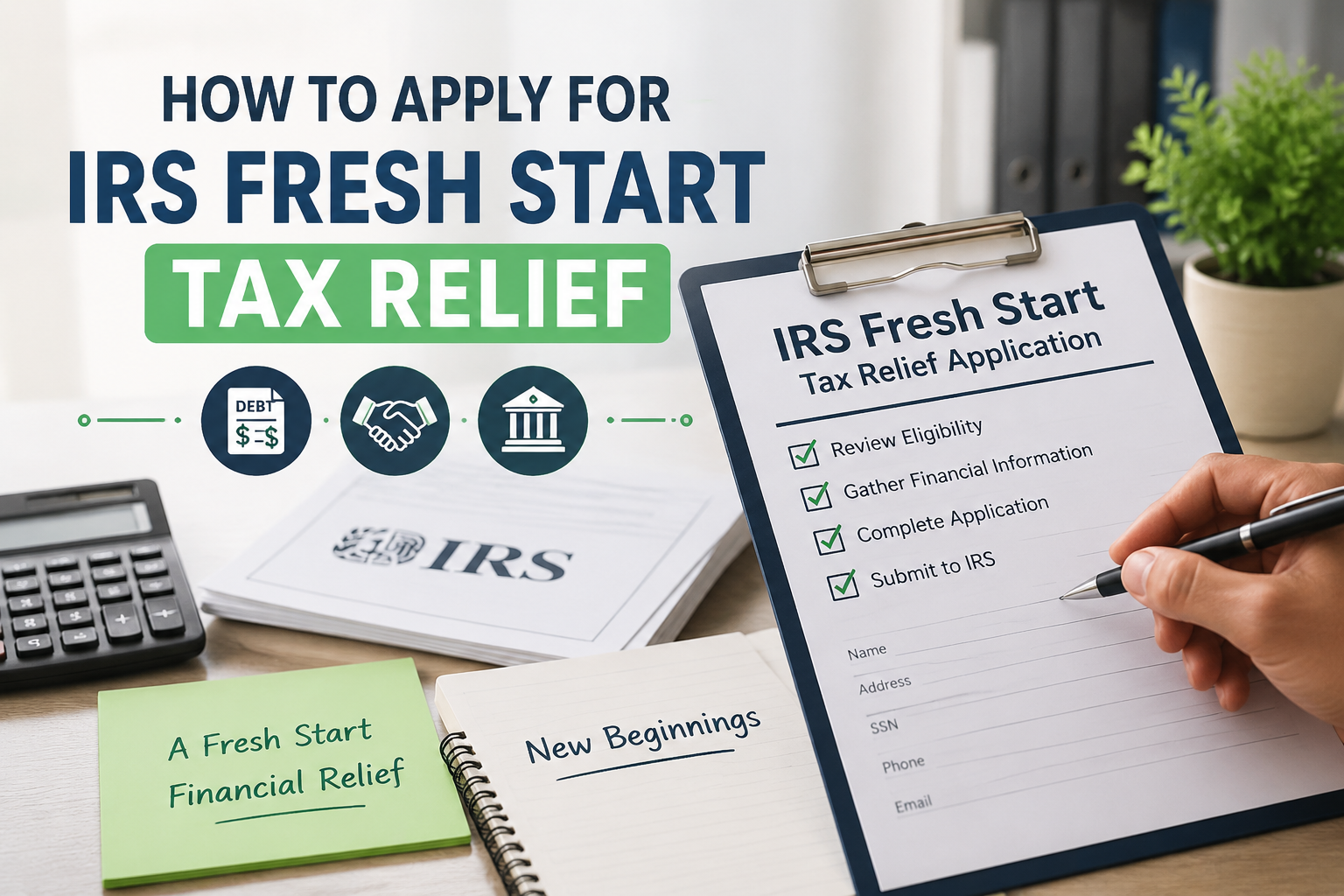
There isn't one universal “Fresh Start application.” Instead, the process depends on the specific tax-resolution option you are pursuing.
Step 1: Determine What You Owe
Start by establishing your current IRS balance.
Review IRS notices and account information carefully. Make sure you understand:
Tax years involved
Original tax liability
Penalties
Interest
Payments already made
Current balance
If the amount looks incorrect, investigate the discrepancy before agreeing to a payment arrangement.
Step 2: File Missing Returns
If you have unfiled federal tax returns, address them as soon as possible.
Missing returns can complicate IRS collection matters and may affect your ability to qualify for certain resolution programs.
Step 3: Review Your Finances
Create a realistic picture of your financial situation.
Document:
Monthly income
Housing costs
Utilities
Transportation
Food
Insurance
Medical expenses
Loan payments
Bank balances
Investments
Real estate
Other significant assets and liabilities
Honesty is essential. Providing inaccurate financial information can create additional problems.
Step 4: Compare Your Resolution Options
Don't automatically choose the first option you hear about.
Consider whether your situation is better suited to:
Full payment
Short-term payment arrangement
Long-term installment agreement
Offer in Compromise
Penalty relief
Currently Not Collectible status
Another appropriate IRS resolution strategy
Step 5: Submit the Required Forms and Documentation
Different IRS programs require different forms and supporting documents.
For example, an Offer in Compromise involves a more detailed financial evaluation than simply setting up certain payment arrangements.
Make sure information is accurate and consistent across your application and supporting documentation.
Step 6: Follow the Agreement
If the IRS approves a payment arrangement or settlement, follow its terms carefully.
Continue filing future tax returns on time and paying new tax obligations as required.
Failing to remain compliant can put an approved arrangement at risk.
What Is the IRS Fresh Start Program's Biggest Benefit?
The biggest benefit is flexibility.
For taxpayers who cannot immediately pay their entire IRS liability, available collection alternatives may provide a structured path toward resolving the debt.
Instead of facing the question, “How can I pay thousands of dollars today?” a taxpayer may be able to explore whether a manageable payment arrangement or another collection alternative is available.
However, flexibility does not mean automatic forgiveness.
Common IRS Fresh Start Mistakes to Avoid
Mistake #1: Believing Fresh Start Erases All Tax Debt
This is perhaps the most common misconception.
The IRS Fresh Start initiatives do not mean that everyone with tax debt can have their balance erased.
Mistake #2: Ignoring IRS Notices
An IRS notice should not automatically be treated as something that can wait.
Collection actions can become more serious over time.
Mistake #3: Filing Incomplete or Incorrect Financial Information
Financial applications must be accurate.
Understating income or assets can cause delays, rejection, or other complications.
Mistake #4: Assuming an Offer in Compromise Is the Best Option
An Offer in Compromise can be valuable for qualifying taxpayers, but it is not appropriate for everyone.
A payment plan or another resolution strategy may make more sense depending on the taxpayer's finances.
Mistake #5: Forgetting Future Taxes
Resolving an old tax liability does not eliminate the responsibility to file future returns and pay future taxes.
Staying compliant is an important part of maintaining a successful resolution.
How to Improve Your Chances of a Successful Tax Resolution
There is no guaranteed outcome with IRS tax resolution, but taxpayers can take practical steps to make the process more organized.
Stay Current With Tax Filing
File all required returns and address missing filings.
Keep Detailed Financial Records
Maintain documentation supporting income, expenses, assets, and liabilities.
Respond to IRS Communications
Don't ignore notices, deadlines, or requests for information.
Understand the Numbers
Know exactly how much you owe and which tax years are involved.
Consider Professional Guidance
Tax-resolution matters can become complicated when multiple years, collection actions, business taxes, or substantial liabilities are involved.
A qualified tax professional can help explain potential options and identify documentation that may be required.
Organizations such as Resolve Federal Tax Group can be a starting point for taxpayers who want to discuss their circumstances and understand potential IRS tax-resolution strategies.
IRS Fresh Start Program Example
Consider a taxpayer who owes $35,000 to the IRS.
They have:
Stable employment
Limited savings
Significant monthly living expenses
No realistic ability to pay $35,000 immediately
Instead of assuming the debt must be paid in one lump sum, the taxpayer could review available IRS collection options.
If the taxpayer can afford regular payments, an installment agreement may be worth exploring.
If the taxpayer's financial circumstances indicate that they cannot realistically pay the full liability, other options may need to be evaluated.
The important lesson is that the right solution depends on the taxpayer's complete financial picture—not simply the amount owed.
When Should You Get Professional IRS Tax Help?
Professional help may be particularly useful when:
You owe a substantial amount.
You have multiple years of tax debt.
You have unfiled returns.
The IRS has issued a levy or garnishment.
You are considering an Offer in Compromise.
You operate a business.
You disagree with an IRS assessment.
You are unsure which resolution option fits your circumstances.
You have received urgent IRS collection notices.
A qualified tax professional can help you understand the available options and communicate with the IRS when appropriate.
Frequently Asked Questions
Is the IRS Fresh Start Program still available?
The term “Fresh Start Program” refers to various IRS initiatives and collection changes rather than one standalone program. Current eligibility and requirements depend on the specific IRS option involved.
Does the IRS Fresh Start Program reduce tax debt?
Potentially, but not automatically. Certain taxpayers may qualify for an Offer in Compromise or other relief, while others may need to use a payment arrangement or different collection alternative.
How much tax debt can be forgiven?
There is no universal amount of tax debt that the IRS automatically forgives under Fresh Start. An Offer in Compromise, for example, is based on specific eligibility requirements and financial circumstances.
Can I qualify if I owe less than $10,000?
Possibly. Eligibility for IRS collection options depends on the specific program and your circumstances. The amount owed is only one factor.
Can I get Fresh Start if I haven't filed my taxes?
Unfiled returns can create eligibility and compliance issues. In many situations, taxpayers need to address their filing obligations before pursuing certain resolution options.
Does an IRS payment plan stop interest?
Generally, interest and applicable penalties may continue to accrue until the tax liability is fully paid, even when a payment arrangement is in place.
Is an IRS Offer in Compromise the same as Fresh Start?
No. An Offer in Compromise is a specific IRS tax-resolution option. “Fresh Start” is a broader term commonly used for a collection of IRS initiatives and changes intended to make certain tax-resolution options more accessible.
Conclusion: Take the Right Step Toward Resolving IRS Tax Debt
So, how does the IRS Fresh Start Program work?
The key is understanding that Fresh Start is not a magic tax-forgiveness program. It represents a range of IRS initiatives and collection options that may help qualifying taxpayers manage and resolve federal tax debt.
Depending on your circumstances, you may be able to consider an installment agreement, penalty relief, Currently Not Collectible status, an IRS Offer in Compromise, or another appropriate resolution strategy.
The best first step is to understand your tax liability, become current with required filings, review your finances, and determine which option may actually fit your situation.
If you're uncertain where to begin, Resolve Federal Tax Group can help you explore your tax-resolution options and understand the next steps available for your circumstances.