If you owe money to the IRS, you may be wondering, “How do I qualify for tax relief?” The good news is that the IRS offers several programs that can help eligible taxpayers manage or, in certain circumstances, reduce their federal tax obligations.
However, tax relief is not automatic. Eligibility depends on factors such as your income, expenses, assets, tax balance, filing history, and ability to pay. The best option for one taxpayer may be completely different for another.
This guide explains how IRS tax relief works, what qualifications generally matter, how to prepare, and when professional tax relief services may be worth considering.
Quick answer: You may qualify for tax relief if you meet the requirements of an applicable IRS program based on your financial situation, tax liability, filing compliance, and ability to pay. Potential options include installment agreements, penalty relief, Currently Not Collectible status, and an Offer in Compromise.
What Is Tax Relief?
Tax relief generally refers to programs or strategies that help eligible taxpayers address federal tax liabilities.
Depending on your circumstances, relief could involve:
Making monthly payments instead of paying your balance immediately
Requesting certain IRS penalties to be removed
Temporarily delaying collection activity
Settling qualifying tax debt for less than the full amount owed
Correcting unfiled or inaccurate tax returns
Addressing IRS collection actions such as levies or garnishments
It is important to understand that tax relief does not mean everyone can have their tax debt erased. Each IRS program has its own eligibility rules.
What Factors Determine Whether You Qualify for Tax Relief?
The IRS generally looks at your overall financial and tax situation when determining eligibility for particular programs.
1. Your Total Tax Debt
The amount you owe can influence which resolution options may be available.
For example, a taxpayer with a relatively small balance may be able to resolve the debt through a payment arrangement, while someone with substantial tax debt and limited ability to pay may need to explore other options.
2. Your Income
Your household income is an important part of many IRS financial evaluations.
The IRS may consider income from sources such as:
Employment
Self-employment
Business operations
Retirement
Investments
Rental income
Other recurring sources
Your income helps determine whether you can reasonably afford to pay your tax liability.
3. Your Monthly Living Expenses
Your necessary expenses can also affect your ability to pay.
These may include qualifying costs associated with:
Housing
Utilities
Food
Transportation
Health care
Insurance
Certain other necessary living expenses
The IRS may evaluate your financial information when determining whether a proposed resolution is reasonable.
4. Your Assets
Assets can include:
Bank accounts
Real estate
Vehicles
Investments
Retirement accounts
Business interests
Other valuable property
A taxpayer with significant assets may have different resolution possibilities than someone with limited assets.
5. Your Tax Filing Compliance
One of the most commonly overlooked issues is filing compliance.
If you have unfiled tax returns, resolving your tax debt may become more complicated. Before pursuing certain resolution options, you may need to bring required returns up to date.
Tip: Don't assume that because you cannot pay your taxes, you should stop filing returns. Filing requirements can continue even when you have an outstanding IRS balance.
Common IRS Tax Relief Options
There is no single program that works for everyone. Here are some of the most common options taxpayers may investigate.
Installment Agreements
An installment agreement allows eligible taxpayers to pay their IRS debt over time rather than making one large payment.
This can be useful if you have enough income to make regular payments but cannot afford to pay the entire balance immediately.
Before choosing this option, consider whether the proposed monthly payment is genuinely affordable within your household budget.
Offer in Compromise
An Offer in Compromise may allow a qualifying taxpayer to settle certain federal tax debt for less than the full amount owed.
However, this is not simply a request to “pay less.” The IRS evaluates eligibility and financial information under specific rules.
A taxpayer considering an Offer in Compromise should carefully review:
Income
Expenses
Assets
Equity
Tax liabilities
Filing and payment compliance
Ability to pay
Professional guidance can be especially useful when determining whether pursuing an Offer in Compromise is realistic.
Penalty Relief
In some circumstances, taxpayers may qualify for penalty relief.
Eligibility depends on the specific penalty, the taxpayer's circumstances, and applicable IRS rules. Certain taxpayers may qualify for relief based on reasonable cause or other available provisions.
Don't automatically assume every penalty can be removed. Instead, determine which penalty applies and whether you meet the applicable requirements.
Currently Not Collectible Status
If paying the IRS would create serious financial hardship, a taxpayer may potentially qualify for Currently Not Collectible status.
This generally does not eliminate the tax debt. Instead, it may temporarily delay certain collection efforts when the IRS determines that the taxpayer cannot currently afford to pay.
Interest and penalties may continue to accrue, and the IRS may periodically review the taxpayer's financial circumstances.
Tax Debt Settlement and Resolution
Tax debt resolution is the broader process of finding an appropriate way to address an IRS liability.
Depending on the situation, a resolution strategy could involve a payment arrangement, penalty relief, an Offer in Compromise, or another IRS-approved option.
How to Qualify for Tax Relief: Step-by-Step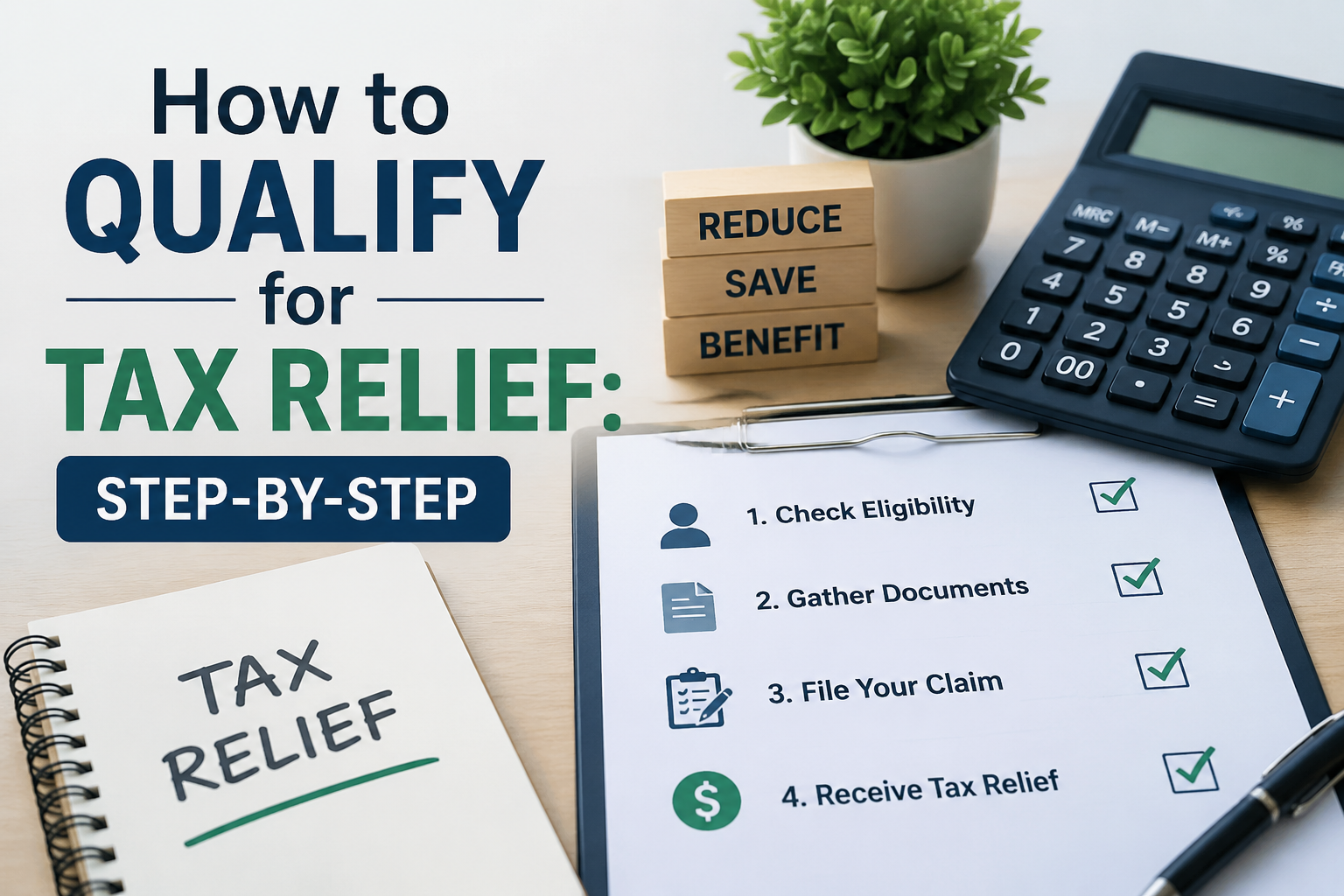
If you're trying to determine whether you qualify, don't start by applying randomly for programs. Start with your actual financial and tax information.
Step 1: Confirm How Much You Owe
Review your IRS records and notices to determine:
Total balance
Tax years involved
Accrued penalties and interest
Collection status
Any pending deadlines
Knowing the exact problem is the foundation of a useful resolution strategy.
Step 2: Check Your Filing Status
Determine whether all required federal tax returns have been filed.
If you have missing returns, identify which years are outstanding and address them as soon as possible.
Step 3: Calculate Your Financial Position
Create a realistic picture of your finances.
List your:
Income: wages, business income, retirement income, investments, and other sources.
Expenses: housing, utilities, food, transportation, insurance, medical costs, and other necessary expenses.
Assets: property, vehicles, bank accounts, investments, and other significant assets.
This information can help you understand which resolution options may be realistic.
Step 4: Review Available IRS Programs
Once you understand your circumstances, compare potential options.
For example:
Can you afford to pay over time? An installment agreement may be worth investigating.
Can you demonstrate significant financial limitations? You may need to explore hardship-related options.
Is your ability to pay substantially less than the amount owed? An Offer in Compromise may warrant further evaluation.
Are penalties a significant portion of your balance? Check whether you may qualify for applicable penalty relief.
Step 5: Gather Supporting Documentation
Depending on your situation, you may need documents such as:
Recent income statements
Bank statements
Tax returns
Mortgage or rent information
Utility bills
Insurance records
Vehicle information
Investment statements
Business financial records
IRS notices
Keep your information organized and accurate.
Step 6: Get Professional Advice When the Situation Is Complex
If you have significant tax debt, multiple tax years, business tax issues, collection actions, or complicated financial circumstances, consider speaking with qualified tax professionals.
A tax attorney, enrolled agent, or CPA may be appropriate depending on the nature of your situation.
Organizations such as Resolve Federal Tax Group can also be considered when researching professional tax relief services and determining what type of assistance may fit your circumstances.
Example: How Different Taxpayers May Qualify
Consider two hypothetical taxpayers.
Taxpayer A owes $12,000, has stable employment, and can reasonably afford a monthly payment but cannot pay the entire balance immediately.
A payment arrangement may be more practical than pursuing a settlement.
Taxpayer B owes substantially more, has limited disposable income, and has little ability to pay the balance within the IRS collection period.
Depending on the complete financial picture and applicable IRS requirements, that taxpayer may need to investigate hardship options or an Offer in Compromise.
The lesson is simple: the amount you owe alone does not determine your best tax-relief option.
Mistakes to Avoid When Seeking Tax Relief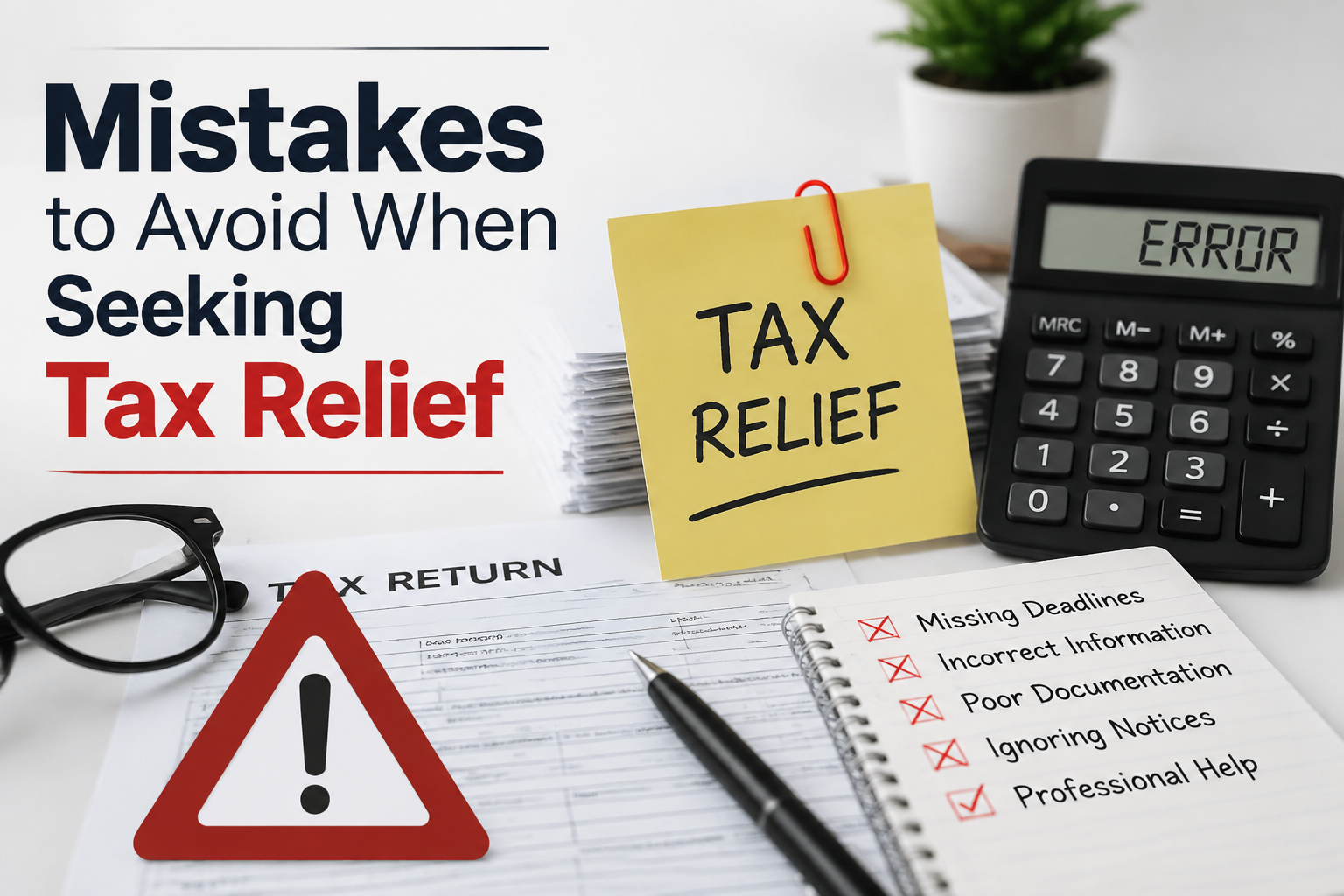
Ignoring IRS Notices
Ignoring letters from the IRS rarely makes the underlying problem disappear. Notices may contain deadlines that affect your available options.
Promising Yourself You Will “Deal With It Later”
Tax debt can accumulate interest and penalties. Delaying action can make an already difficult situation more expensive.
Assuming You Automatically Qualify
Seeing an advertisement for a tax-relief program does not mean you meet its requirements.
Always verify eligibility based on your actual circumstances.
Filing Incomplete or Inaccurate Information
Financial information submitted during a tax-resolution process should be complete and accurate. Incorrect information can create additional problems.
Choosing a Solution Based Only on the Lowest Monthly Payment
A low monthly payment may sound attractive, but you should understand the total financial impact, applicable terms, and whether the arrangement is sustainable.
Believing Guaranteed Tax Debt Reduction Claims
Be cautious of companies or individuals promising that they can eliminate your IRS debt regardless of your circumstances.
Tax relief outcomes depend on applicable laws, IRS rules, eligibility, and individual facts.
When Should You Consider Professional Tax Relief Services?
Professional assistance may be particularly valuable when:
You owe a substantial amount to the IRS
You have several years of tax debt
You have unfiled returns
The IRS has issued a levy or garnishment
You operate a business
You are considering an Offer in Compromise
You have received multiple IRS notices
You disagree with an IRS determination
Your financial situation is complicated
You are unsure which resolution option applies
A qualified professional can help you understand your situation, organize financial information, communicate with the IRS when appropriate, and evaluate potential resolution strategies.
How to Choose a Tax Relief Professional
Before hiring anyone, ask questions about:
Credentials: What professional qualifications do they have?
Experience: Have they handled cases similar to yours?
Services: What exactly will they do for you?
Fees: How are fees calculated?
Communication: Who will be your point of contact?
Expectations: What outcomes are realistic?
Documentation: Will they clearly explain what information they need?
Trustworthy professionals should be willing to discuss both the potential benefits and limitations of a strategy.
Frequently Asked Questions About Tax Relief
Can anyone qualify for tax relief?
No. Eligibility depends on the specific IRS program and your financial and tax circumstances.
How can I know which tax relief program is right for me?
Start by reviewing your tax debt, filing status, income, expenses, assets, and ability to pay. A qualified tax professional can help you evaluate potential options.
Can tax relief eliminate my IRS debt?
Some programs can potentially reduce qualifying tax liabilities, but most tax-relief options do not simply erase tax debt. Eligibility requirements apply.
Does having low income automatically qualify me for tax relief?
No. Income is only one part of the overall evaluation. The IRS may also consider expenses, assets, tax liabilities, filing history, and other factors.
Is an Offer in Compromise available to everyone?
No. An Offer in Compromise has specific eligibility and evaluation requirements. You should determine whether you have a reasonable basis for applying before submitting an offer.
Should I hire a tax attorney?
A tax attorney may be helpful when your situation involves complex tax-law issues, legal concerns, significant IRS disputes, or other circumstances where legal representation is appropriate. For other cases, an enrolled agent or CPA may also provide suitable tax-resolution assistance.
Can I negotiate with the IRS myself?
Yes, taxpayers can communicate with the IRS themselves. However, complicated cases may benefit from professional assistance, particularly when significant amounts of money or collection actions are involved.
Final Thoughts: Start With Your Actual Financial Situation
So, how do I qualify for tax relief?
There isn't one income limit, debt amount, or universal formula that guarantees eligibility. Your potential options depend on the details of your tax situation, financial resources, filing history, and ability to pay.
The smartest first step is to understand exactly what you owe, make sure your tax filings are current, organize your financial information, and then evaluate the IRS programs that may apply.
If the situation is complicated or you are facing aggressive collection activity, professional tax relief services can help you better understand your options. Resolve Federal Tax Group may be one organization to consider when researching professional assistance.
Most importantly, avoid making decisions based on promises of guaranteed results. Effective tax resolution starts with accurate information, realistic expectations, and a strategy based on your individual circumstances.
Disclaimer: This article is for general informational purposes and is not legal or tax advice. IRS eligibility requirements and tax laws can change, and individual outcomes vary. Consider consulting a qualified tax professional regarding your specific situation.