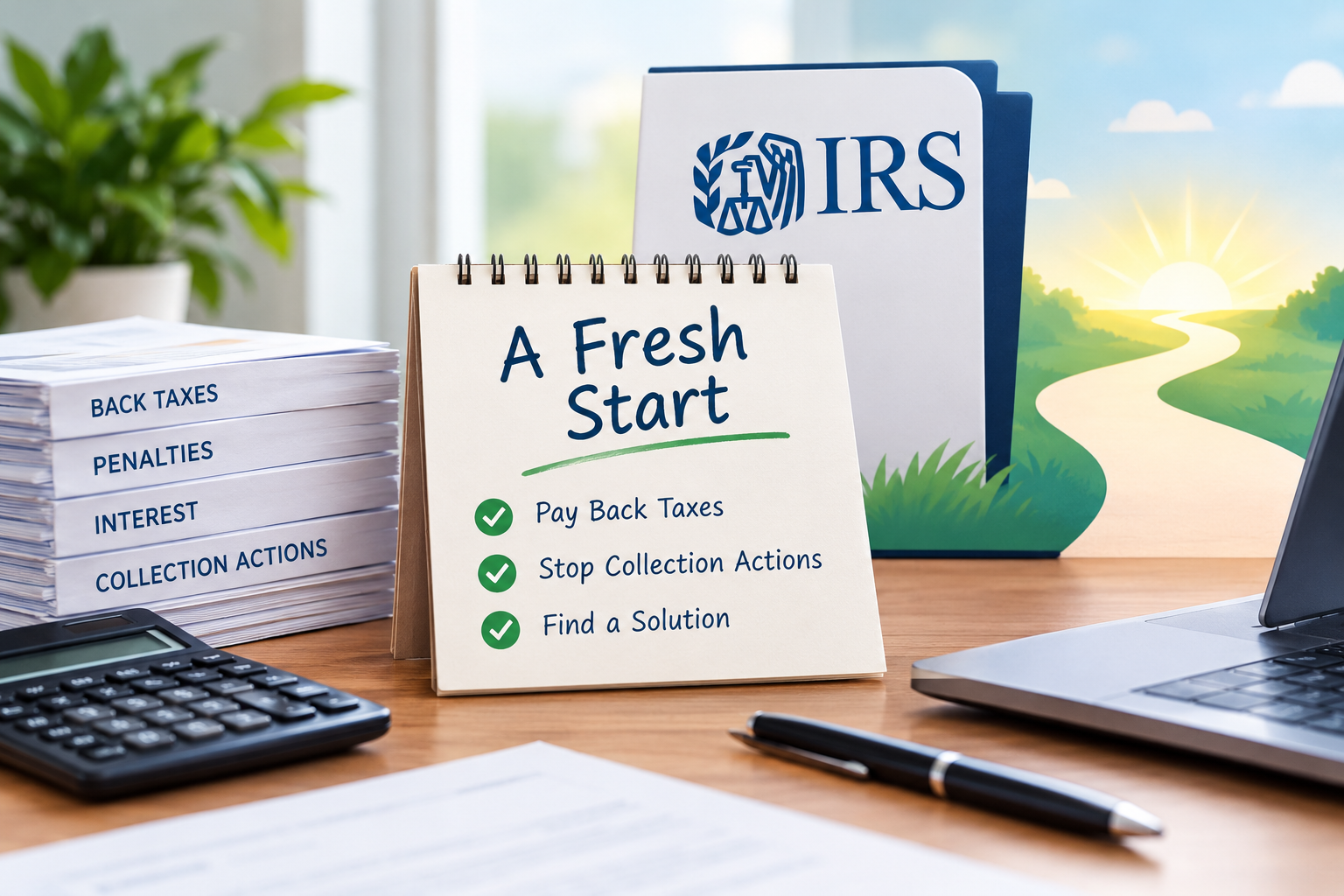
Yes, the IRS has tax relief options commonly associated with the IRS Fresh Start Program. These options can help eligible taxpayers manage unpaid taxes through installment agreements, Offers in Compromise, and certain tax lien relief measures. However, the Fresh Start Program is not automatic tax forgiveness, and eligibility depends on your financial situation, tax history, and the specific relief option you pursue.
If you owe back taxes, have received collection notices, or are struggling to pay your tax bill, understanding these options can help you make a more informed decision. The right approach depends on how much you owe, your ability to pay, and whether you have filed all required tax returns.
What Is the IRS Fresh Start Program?

The IRS Fresh Start Program refers to a group of tax collection changes and relief options introduced to make it easier for certain taxpayers to address outstanding tax debts.
Rather than eliminating everyone's tax liability, these options provide different ways to manage or resolve unpaid taxes. Depending on your circumstances, you may be able to arrange monthly payments, request a settlement for less than the full amount owed, or explore relief from certain collection actions.
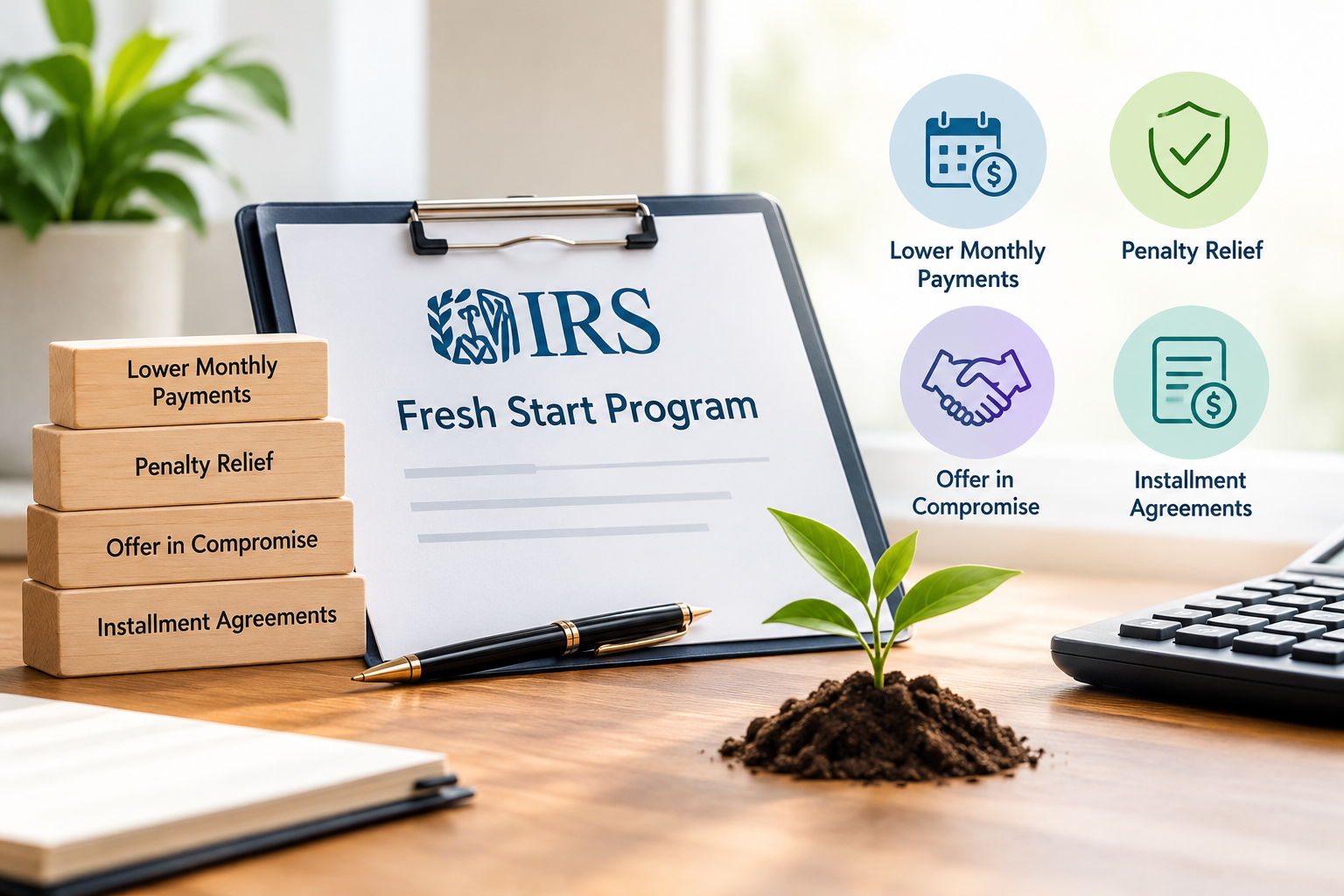
The options commonly associated with the program include:
Installment agreements: Allow eligible taxpayers to pay their tax debt over time.
Offer in Compromise: May allow qualifying taxpayers to settle certain tax debts for less than the full amount owed.
Tax lien relief: Certain taxpayers may qualify for relief involving a federal tax lien.
Penalty relief: Eligible taxpayers may qualify to have certain penalties reduced or removed.
Each option has different requirements. The IRS reviews the details of your case before determining whether you qualify.
Why Does the IRS Fresh Start Program Matter?
Unpaid taxes can create financial pressure, especially when interest, penalties, and collection activity make the balance harder to manage. Taxpayers may worry about wage garnishments, bank account levies, federal tax liens, or repeated notices.
The IRS Fresh Start Program can help eligible taxpayers explore structured ways to address these challenges.
For example, someone who cannot afford to pay a large tax bill immediately may be able to request a payment arrangement. A taxpayer whose financial circumstances make full repayment unlikely may want to explore an Offer in Compromise.
The important point is that tax relief depends on your circumstances, and no single option works for everyone.
Who May Qualify for IRS Fresh Start Tax Relief?
There is no single eligibility test for every option associated with the IRS Fresh Start Program. Qualification depends on the specific program, the taxpayer's financial position, and applicable IRS rules.
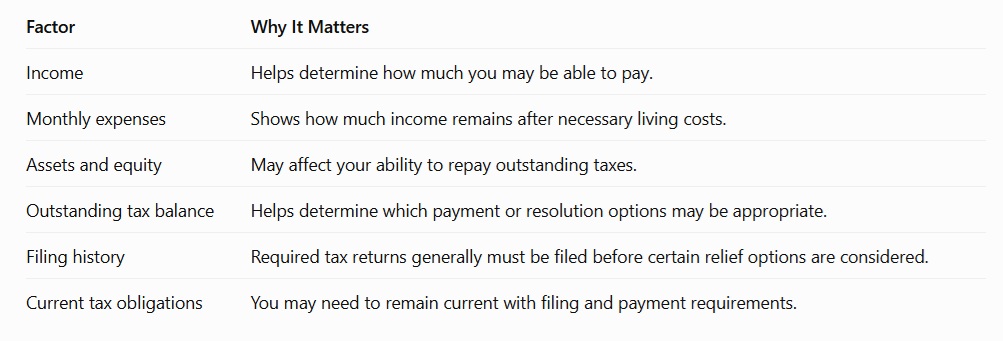
The IRS may consider several factors.
1. Your Income and Expenses
Your income and necessary living expenses can affect which tax relief options are realistic. The IRS may review your financial information to understand your ability to pay.
If you have limited disposable income, you may want to examine payment arrangements or other options based on your financial circumstances.
2. Your Outstanding Tax Debt
The amount you owe may influence which options are available. However, there is no universal tax debt amount that guarantees eligibility for every Fresh Start-related option.
For an Offer in Compromise, the IRS generally evaluates your ability to pay, income, expenses, and asset equity.
3. Your Tax Filing History
Filing required tax returns is an important step when addressing tax debt. If you have unfiled returns, you may need to address them before the IRS can consider certain relief requests.
Filing your returns also helps establish a clearer picture of your tax situation.
4. Your Current Tax Compliance
Some relief options require you to meet current tax filing and payment obligations. For example, self-employed taxpayers may need to stay current with required estimated tax payments, while employers may need to meet federal tax deposit requirements.
Meeting these obligations can help prevent new tax debt from accumulating while you address an existing balance.
What Tax Relief Options Are Available Through the IRS Fresh Start Program?
The best option depends on your financial situation and the type of tax debt you have. The following are some of the main options taxpayers may explore.
1. IRS Installment Agreements
An installment agreement allows eligible taxpayers to pay their tax debt over time instead of paying the entire balance immediately.
This may be useful if you owe back taxes but can afford regular payments.
For example, imagine you owe $6,000 in federal taxes and cannot pay the full amount at once. Depending on your eligibility and the terms approved, a payment plan may allow you to make payments over a period of time.
Before choosing this option, keep in mind:
Interest and penalties may continue to accrue until the balance is paid.
You must follow the payment arrangement's terms.
You generally need to file future tax returns and meet ongoing tax obligations.
Fees or other requirements may apply, depending on the type of agreement.
An installment agreement does not erase your tax debt. It provides a structured way to repay it.
2. IRS Offer in Compromise
An IRS Offer in Compromise may allow an eligible taxpayer to settle certain tax liabilities for less than the full amount owed.
The IRS generally considers factors such as income, allowable living expenses, asset equity, and ability to pay. Approval is not guaranteed, and the agency evaluates each application based on its rules and the taxpayer's circumstances.
An Offer in Compromise may be worth exploring if paying the full tax balance would be financially unrealistic and you meet the applicable requirements.
Before applying, consider the following:
Make sure required tax returns have been filed.
Review your financial information carefully.
Understand the application requirements and any applicable fees or initial payment.
Be cautious of companies that promise guaranteed acceptance or claim they can eliminate any tax debt.
Qualifying low-income taxpayers may be exempt from certain application fees and initial payment requirements. The applicable rules should be reviewed before submitting an application.
3. IRS Penalty Relief
Tax penalties can increase the amount you owe. In some situations, the IRS may provide penalty relief to eligible taxpayers.
Depending on the circumstances, relief may be available through first-time penalty abatement or a reasonable-cause request.
First-time penalty abatement may apply when a taxpayer meets the IRS's eligibility requirements and has an appropriate compliance history. Reasonable-cause relief may be available when circumstances beyond a taxpayer's control prevented them from meeting certain tax obligations.
However, not every penalty qualifies for relief. You may also remain responsible for the underlying tax balance and applicable interest.
4. Federal Tax Lien Relief
A federal tax lien is a legal claim against a taxpayer's property when qualifying tax debt remains unpaid. A lien is different from a levy, which involves the actual seizure of property or assets to satisfy a tax debt.
Certain taxpayers may qualify for relief involving a federal tax lien, depending on the circumstances and applicable IRS requirements.
If you have received a lien notice, review it carefully and understand what action the IRS has taken. Do not assume that a payment plan or other tax relief request automatically removes an existing lien.
How to Apply for IRS Fresh Start Tax Relief
 There is no single application for every option associated with the IRS Fresh Start Program. The steps depend on the type of relief you are seeking.
The following process can help you get started.
Step 1: Review Your Tax Balance
Determine how much you owe, which tax years are involved, and whether penalties or interest have been added. Review any notices you have received so you understand the status of your account.
Step 2: File Any Missing Tax Returns
If you have unfiled tax returns, identify which years are missing and determine what needs to be filed. Certain relief options require you to be current with your filing obligations.
Step 3: Gather Your Financial Information
Collect relevant documents, including:
Recent income statements or pay stubs
Bank account information
Monthly housing and living expenses
Loan balances and other financial obligations
Information about assets and property
Tax returns and IRS notices
Accurate financial information can help you assess which options may fit your situation.
Step 4: Compare Available Tax Relief Options
Review whether an installment agreement, Offer in Compromise, penalty relief request, or another option may be appropriate.
Do not choose an option solely because it promises the lowest payment. Consider the requirements, total potential cost, effect on your finances, and obligations you must meet.
Step 5: Submit the Appropriate Request
Follow the application or request process for the option you are pursuing. Complete the required forms accurately and provide supporting information when requested.
Keep copies of documents you submit and records of any payments or communications.
Step 6: Follow Up and Stay Current
Monitor notices and requests for additional information. If you enter a payment arrangement or receive approval for a relief option, make sure you understand the terms.
Continue meeting filing and payment obligations to avoid creating new tax problems.
Common Mistakes to Avoid When Seeking IRS Fresh Start Relief
Taxpayers sometimes make mistakes when trying to resolve outstanding tax debt. Avoiding these errors can help you make more informed decisions.
Assuming the Program Automatically Erases Tax Debt
The IRS Fresh Start Program is not blanket tax forgiveness. Each relief option has its own requirements, and some taxpayers may not qualify.
Believing Everyone Qualifies for an Offer in Compromise
An Offer in Compromise is not available to every taxpayer. The IRS reviews financial information and other eligibility requirements before accepting an offer.
Ignoring IRS Notices
Ignoring tax notices may lead to missed deadlines or additional collection activity. Read notices carefully and determine whether a response or payment is required.
Trusting Guaranteed Tax Relief Claims
Be cautious of companies that guarantee tax debt elimination or claim that everyone can settle their tax debt for a small amount. No legitimate professional can guarantee that the IRS will approve a particular relief request.
Failing to Meet Future Tax Obligations
Resolving an existing tax balance does not remove the need to meet future filing and payment responsibilities. Failing to stay current may create additional problems.
What Happens If Your IRS Fresh Start Request Is Rejected?
A rejected tax relief request does not necessarily mean that you have no other options. The next step depends on why the request was denied and which relief option you pursued.
Consider these steps:
Read the decision carefully. Identify the reason for the rejection and any response deadlines.
Check for missing information. Incomplete financial details or missing documents may have affected the decision.
Review alternative options. You may be able to explore a different payment arrangement or another form of tax relief.
Understand your review rights. Depending on the decision, you may have an opportunity to appeal or request further consideration.
Consider professional assistance. A qualified tax professional may help you understand the decision and evaluate the next steps.
Do not ignore a rejection letter or assume that the IRS will automatically reconsider your case. Review the instructions and deadlines included in the correspondence.
When Should You Consider Hiring a Tax Attorney?
You may not need a tax attorney for every tax problem. However, professional guidance may be helpful when your situation involves significant debt, complex financial circumstances, disputed tax assessments, or active collection actions.
A tax attorney may be worth considering if:
You owe substantial back taxes and are unsure which option to pursue.
You have received notices involving liens, levies, or wage garnishment.
You are dealing with an audit or a dispute about your tax liability.
Your Offer in Compromise or another relief request has been rejected.
You operate a business with complicated tax obligations.
You need help understanding your rights and available resolution options.
Depending on your needs, an enrolled agent or certified public accountant may also be able to assist with tax matters. Enrolled agents and attorneys generally have broad federal IRS representation rights, while a CPA's representation rights depend on their professional status and applicable rules.
When evaluating a tax professional, ask about their credentials, experience with cases similar to yours, fees, services included, and the risks or limitations of the proposed approach.
Resolve Federal Tax Group helps individuals and businesses understand tax resolution options and navigate challenging tax situations. Reviewing your circumstances with a qualified professional may help you determine which options are worth exploring, without assuming that any particular outcome is guaranteed.
Frequently Asked Questions About the IRS Fresh Start Program
1. Does the IRS Still Have a Fresh Start Program in 2026?
Yes. The tax relief options commonly associated with the IRS Fresh Start Program remain available in various forms. These include installment agreements, Offers in Compromise, and certain lien relief options. The program does not automatically forgive tax debt, and eligibility depends on the option and your circumstances.
2. What Is the Minimum Tax Debt Required for the IRS Fresh Start Program?
There is no single minimum debt amount that applies to every option associated with the program. Requirements differ between payment plans, Offers in Compromise, and other forms of relief. Review the rules for the specific option you are considering.
3. Can the IRS Fresh Start Program Eliminate My Tax Debt?
Some eligible taxpayers may settle qualifying tax debt for less than the full balance through an Offer in Compromise. Others may qualify for payment arrangements or penalty relief. However, tax debt is not automatically eliminated, and approval is not guaranteed.
4. Can the IRS Fresh Start Program Help With Back Taxes?
It may help eligible taxpayers manage or resolve back taxes through payment plans, Offers in Compromise, and other applicable relief options. The right choice depends on the amount owed, your financial circumstances, and IRS requirements.
5. Can Self-Employed Taxpayers Qualify for IRS Fresh Start Relief?
Self-employed taxpayers may qualify for certain relief options if they meet the applicable requirements. They may need to address unfiled returns, outstanding tax balances, and current estimated tax payment obligations.
6. How Long Does It Take to Get Approved for Tax Relief?
The processing time varies depending on the type of request, the completeness of your application, and the complexity of your case. Some requests may be resolved more quickly than others. Responding promptly to requests for information can help prevent avoidable delays.
7. Do I Need a Tax Attorney to Apply for IRS Fresh Start Relief?
Not necessarily. Some taxpayers can review their options and apply on their own. However, a tax attorney or another qualified tax professional may be helpful if your situation involves complicated tax issues, collection actions, disputes, or uncertainty about the available options.
8. Is the IRS Fresh Start Program Legitimate?
The IRS tax relief options associated with the Fresh Start Program are legitimate. However, private companies may use the term in advertising, and not every taxpayer qualifies for every option. Be cautious of guarantees, pressure to pay large upfront fees, or claims that your tax debt can definitely be eliminated.
Final Thoughts: Understanding Your IRS Fresh Start Options
The IRS Fresh Start Program can help eligible taxpayers explore practical ways to address unpaid taxes. Depending on your circumstances, you may be able to pay over time, seek an Offer in Compromise, request certain penalty relief, or explore options involving a federal tax lien.
The key is to understand what each option does, review the eligibility requirements, and avoid assuming that tax debt will disappear automatically.
Start by reviewing your outstanding balance, addressing any missing tax returns, and gathering accurate financial information. Then compare the available options and determine which approach best fits your circumstances.
If your tax situation is complicated or you are unsure how to respond to an IRS notice, consider speaking with a qualified tax professional. Understanding your options can help you make informed decisions and work toward resolving your tax obligations responsibly.