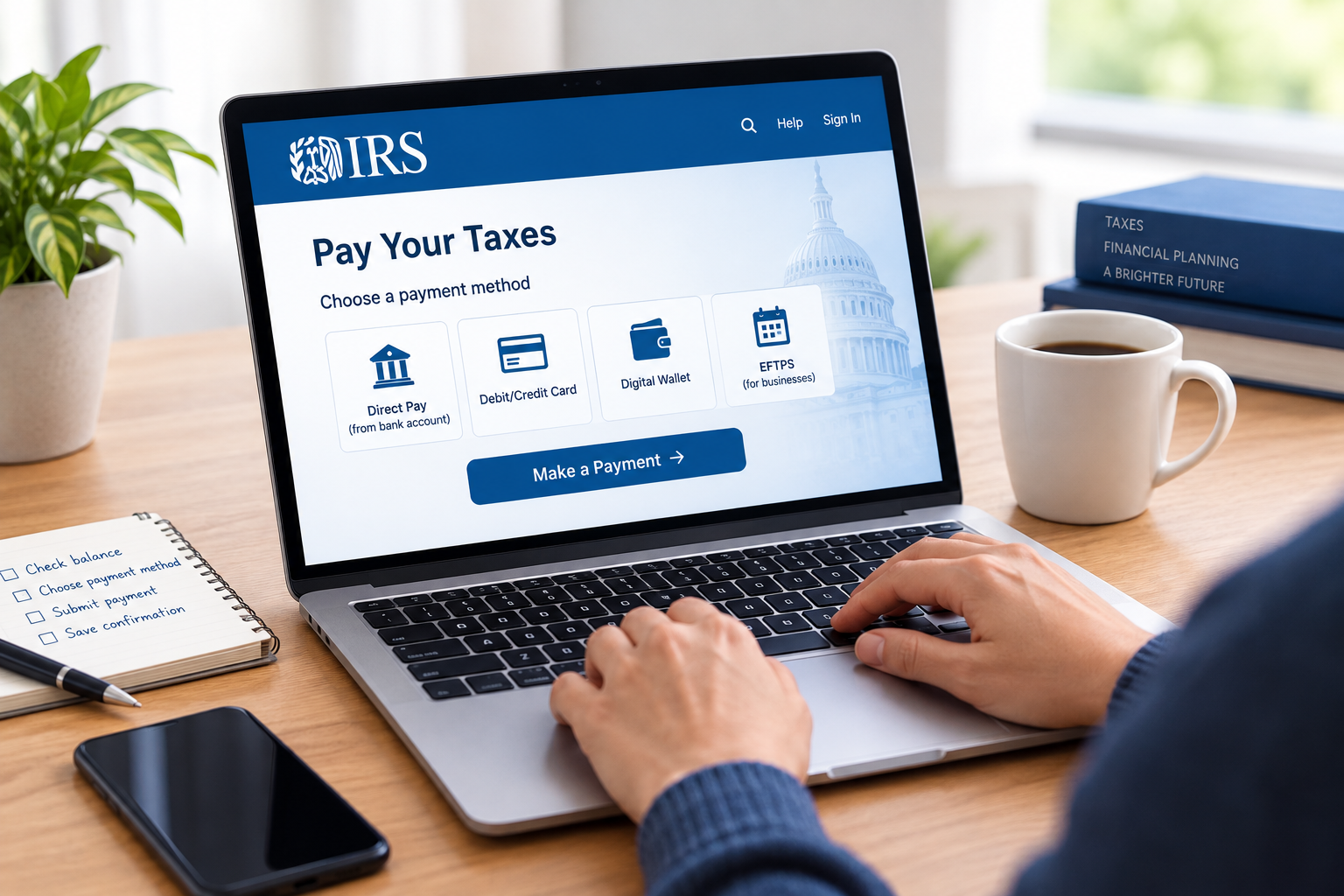
Yes, you can pay your federal taxes online directly to the Internal Revenue Service (IRS). Depending on your situation, you may be able to pay through an IRS online account, Direct Pay from a bank account, a debit or credit card, or an approved digital payment provider. The right option depends on the type of tax you owe, your payment deadline, and any applicable processing fees.
To get started, visit the official IRS website at IRS Payments. Choose a payment method, confirm your tax information, submit your payment, and save the confirmation for your records.
If you cannot afford to pay the full amount, you may have other options, including an installment agreement or, if you qualify, an Offer in Compromise.
Introduction
Paying taxes can feel complicated, especially when you owe money to the IRS and want to avoid late fees, penalties, or additional interest. Fortunately, you usually do not need to mail a check or visit an IRS office to make a federal tax payment.
Online payment options allow individuals, self-employed workers, and business owners to pay eligible tax liabilities electronically. However, choosing the correct payment method matters. You need to make sure your payment is applied to the right tax year and tax type, and that you understand any fees or processing delays.
This guide explains how to pay your taxes online, which methods are available, how to confirm your payment, and what you can do if you cannot afford the full amount.
What Are the Different Ways to Pay the IRS Online?
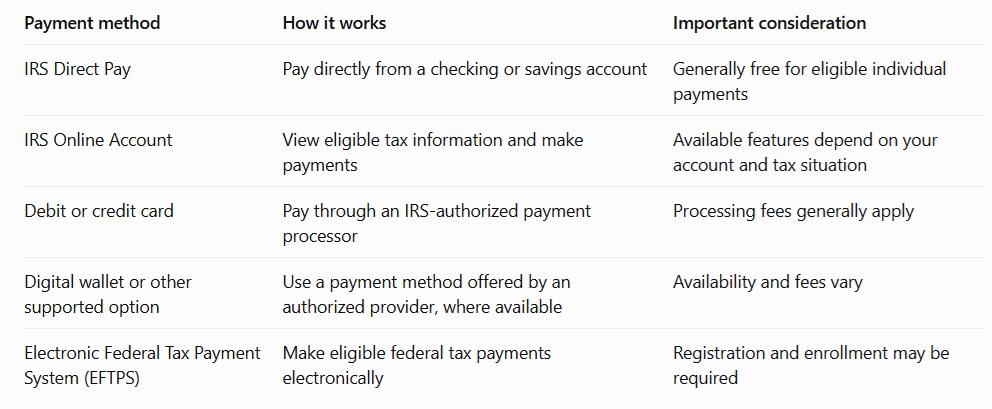
The IRS offers several ways to make electronic payments. Each method has different requirements, processing considerations, and potential costs.
Payment options and fees can change. Verify the current details on the official IRS website before submitting a payment.
1. Pay Through IRS Direct Pay
IRS Direct Pay lets eligible individuals pay federal taxes directly from a bank account without a payment processing fee.
It may be suitable for paying a tax balance, making an estimated tax payment, or handling other supported individual tax payments.
Before starting, have the following information ready:
Your Social Security number or other requested taxpayer information.
Your filing status and details from a previous tax return, if required for verification.
Your bank routing number and account number.
The tax year and type of payment you want to make.
Direct Pay does not require you to create an IRS Online Account, although you must complete the identity verification process for the transaction.
2. Use Your IRS Online Account
An IRS Online Account can help you review certain tax information and manage eligible payments in one place.
Depending on the services available to you, you may be able to:
View your tax balance.
Review certain payment history details.
Make payments electronically.
Check information related to payment plans.
Access available tax records and notices.
An online account can be particularly useful if you are unsure how much you owe. However, account information may not always reflect a recently submitted payment immediately.
3. Pay Using a Debit or Credit Card
If you prefer to use a card, the IRS supports eligible payments through authorized third-party payment processors.
This option can be convenient when you do not want to pay directly from your bank account. However, card payments generally involve a processing fee, and the amount depends on the provider and payment method.
Before proceeding, compare the fee with the cost of paying through a bank account. If you carry a credit card balance, interest charges could also make the payment more expensive.
4. Use EFTPS for Eligible Federal Tax Payments
The Electronic Federal Tax Payment System (EFTPS) is a federal payment service used by individuals and businesses for eligible federal tax payments.
Businesses that need to make payroll tax deposits may find EFTPS useful. Individuals can also use it for supported payment types.
Enrollment may take time, so do not wait until a tax deadline to register if you plan to use this service.
How to Pay Your Taxes Online to the IRS: Step-by-Step
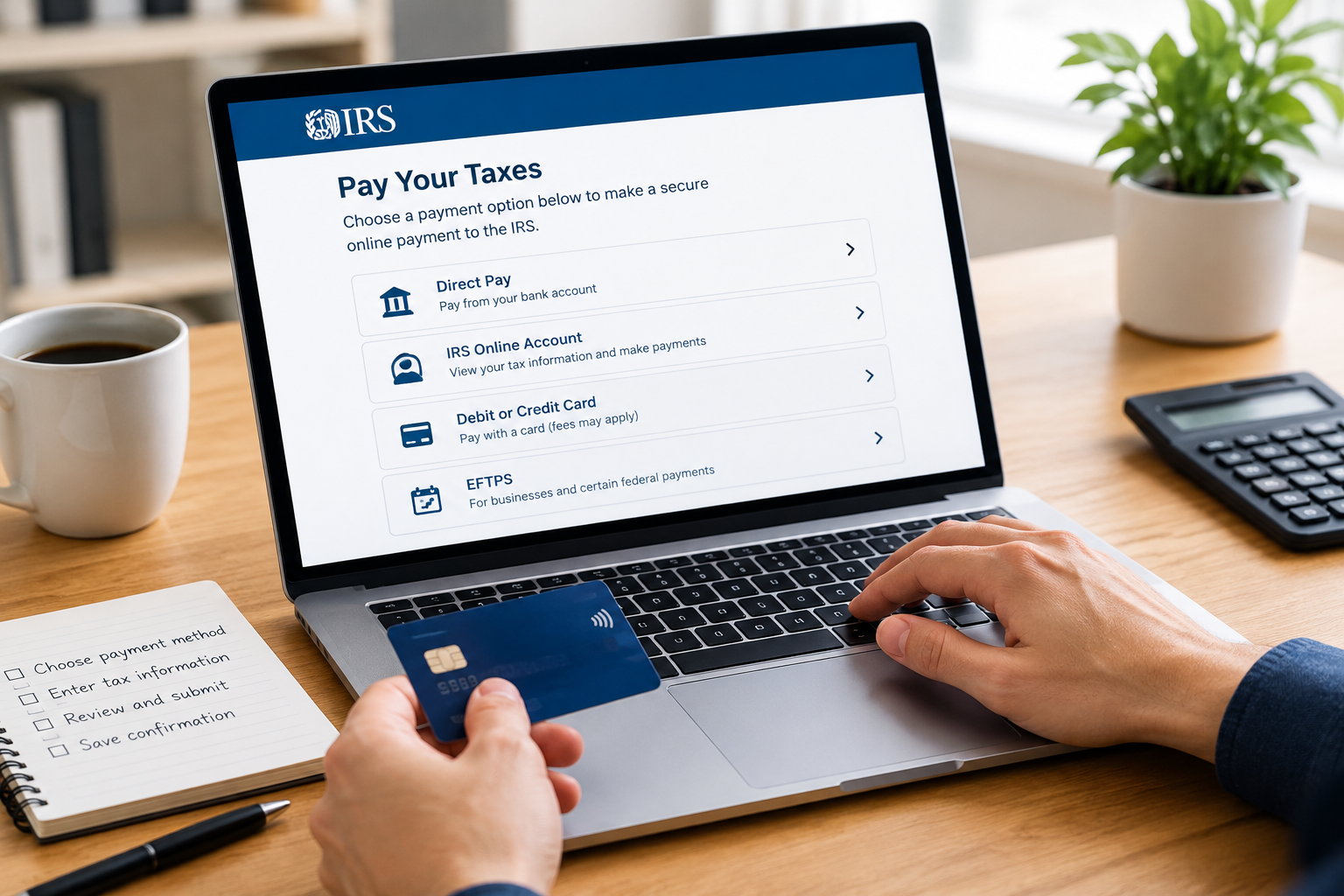
If you want a straightforward way to make a payment, IRS Direct Pay is often a convenient starting point for eligible individual taxpayers who want to pay from a bank account.
Follow these steps.
Step 1: Visit the Official IRS Website
Avoid clicking payment links in unexpected emails, text messages, or social media posts. Using the official website helps reduce the risk of scams and fraudulent payment pages.
Step 2: Choose the Correct Payment Method
Select the option that matches your needs. For example:
Choose Direct Pay if you want to pay from an eligible bank account without signing in.
Sign in to your IRS Online Account if you want to review your tax information and use the available account services.
Choose an authorized card processor if you prefer paying by debit or credit card.
Review EFTPS if you need to make eligible business or recurring federal tax payments.
Not every method supports every type of tax payment. Confirm that your payment type is accepted before proceeding.
Step 3: Enter Your Tax Information
Depending on the method, you may need to select:
The reason for your payment.
The tax form or tax type.
The tax year to which the payment applies.
Your identity verification information.
Read each selection carefully. A payment for the wrong tax year or payment category can create unnecessary complications when reconciling your tax account.
Step 4: Enter Your Bank or Card Details
If paying from your bank account, enter the requested routing and account numbers. If paying by card, follow the processor's instructions and review its fee before submitting.
Use a secure device and connection, and never share your banking credentials with someone who contacts you unexpectedly claiming to represent the IRS.
Step 5: Review and Submit Your Payment
Before submitting, double-check the amount, payment date, tax year, payment type, and account information.
Once the transaction is submitted, save the confirmation number and any confirmation email. For Direct Pay, the confirmation number can help you look up the payment or make changes to a scheduled transaction when permitted.
Step 6: Verify the Payment
Keep your confirmation with your tax records. Check your bank account to see whether the payment was processed, and review your IRS account or payment lookup service when appropriate.
Do not assume that your full tax balance will disappear immediately. Payments and account balances may take time to update.
Can You Pay the IRS Online Without Filing a Tax Return?
Yes, in some situations, you can make a payment separately from filing your tax return. However, paying your taxes and filing your return are two different obligations.
For example, suppose you prepare your tax return and discover that you owe $1,800. You may be able to pay that amount online, but you must still submit the required tax return separately.
If you need more time to file, you may be eligible to request a filing extension. Remember that an extension generally gives you more time to file, not more time to pay. Any unpaid tax can still accrue penalties and interest.
If you are unsure whether you have filed all required returns, check your records before assuming that a payment alone resolves the issue.
What If You Cannot Pay Your Taxes in Full?
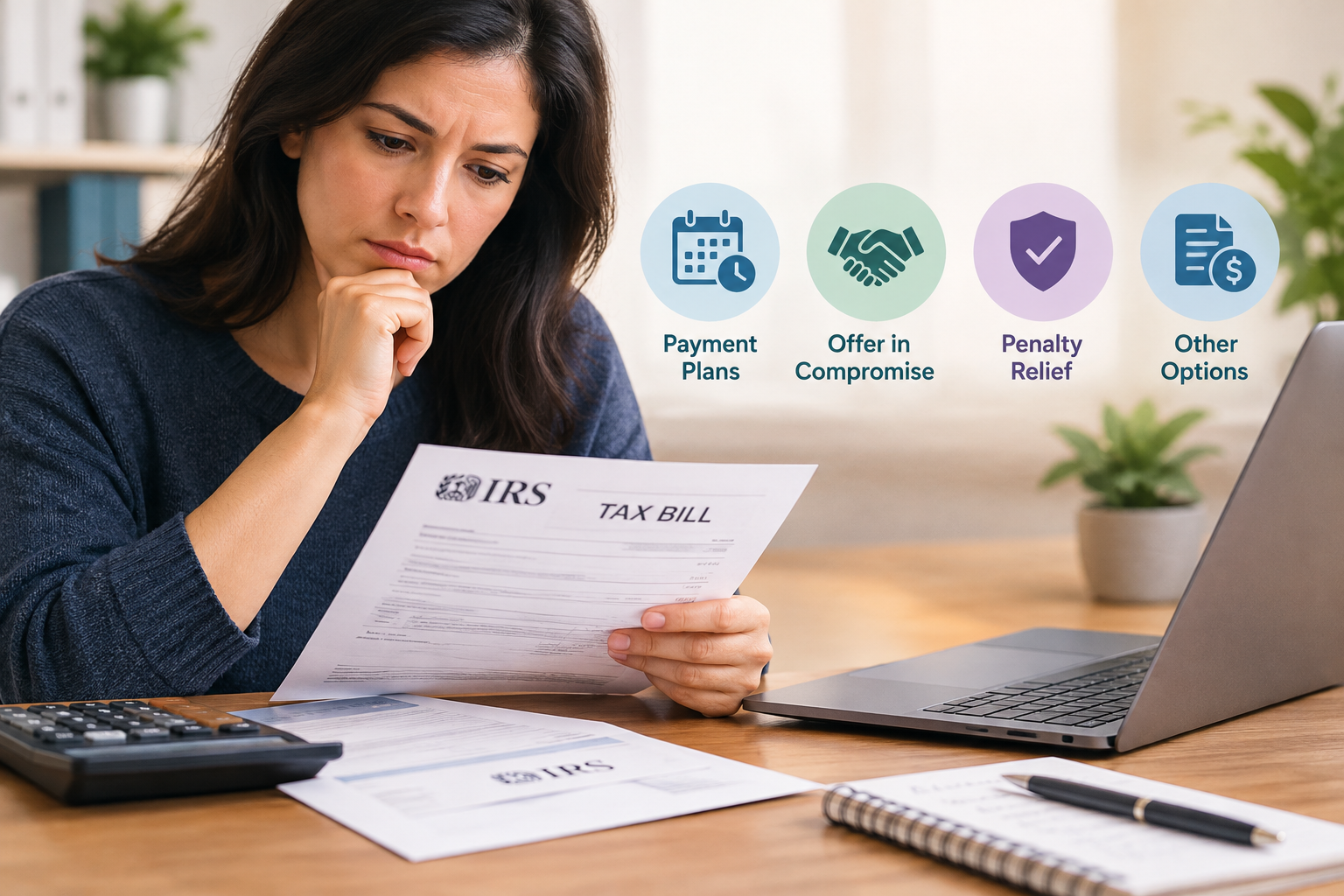
Not everyone has enough money available to cover an unexpected tax bill. If you cannot afford the full amount, you should understand your options rather than ignore the balance.
The right choice depends on how much you owe, your income, your expenses, your assets, your filing history, and your ability to make future payments.
Option 1: Pay What You Can Afford
If you cannot pay the entire balance by the deadline, paying part of it may reduce the amount on which further interest and certain penalties accrue.
However, a partial payment does not automatically prevent collection activity or eliminate the remaining debt. You should explore additional arrangements with the IRS.
Option 2: Apply for an IRS Payment Plan
A payment plan, sometimes called an installment agreement, allows eligible taxpayers to pay their balance over time.
Depending on your circumstances, you may qualify for:
A short-term payment plan: Generally for eligible taxpayers who can pay within 180 days.
A long-term payment plan: Allows qualifying taxpayers to make monthly payments over a longer period.
Eligibility, setup fees, and payment terms vary. Interest and penalties generally continue to accrue until the balance is paid in full.
Option 3: Check Whether You Qualify for an Offer in Compromise
An IRS Offer in Compromise is an arrangement that may allow an eligible taxpayer to settle a tax debt for less than the full amount owed.
The IRS considers factors such as income, expenses, asset equity, and ability to pay. An Offer in Compromise is not available to everyone, and the IRS generally will not accept an offer if it believes the debt can be paid in full through other means.
Before applying, make sure you meet the eligibility requirements and understand the application process, fees, and payment obligations.
Option 4: Explore Other Tax Relief Options
Depending on your circumstances, other forms of tax relief may be worth investigating.
For example:
Penalty relief: You may qualify for relief from certain penalties based on your circumstances and the applicable IRS rules.
Temporary collection delay: If you cannot pay because of serious financial hardship, the IRS may determine that your account is currently not collectible. The debt does not disappear, and interest and penalties may continue.
Tax return corrections: If you believe the amount owed is incorrect, review the notice or return and determine whether a correction or response is appropriate.
Does the IRS Fresh Start Program Help With Online Tax Payments?
The IRS Fresh Start Program is a commonly used name for a collection of tax relief changes and options designed to help eligible taxpayers address certain tax debts.
It is not a separate payment website, and enrollment does not automatically erase tax debt. Depending on eligibility, taxpayers may benefit from options such as payment plans or an Offer in Compromise.
If you have received IRS notices, accumulated back taxes, or are struggling to make payments, review the current IRS requirements rather than assuming that you qualify for a particular program.
Common Mistakes to Avoid When Paying the IRS Online
Online payments can be straightforward, but small errors can lead to confusion or missed deadlines.
Selecting the wrong tax year
A payment intended for one tax year may not be credited as you expected if you select another year. Verify the year before submitting.
Ignoring payment processing fees
Card processors generally charge fees. Compare the total cost with a free bank-account option before choosing a method.
Assuming payment replaces filing
Submitting a payment does not necessarily satisfy your obligation to file a tax return. Complete both steps when required.
Using an unofficial payment website
Start at IRS.gov and follow links to the official service or authorized processor. Be cautious of unsolicited demands for immediate payment.
Failing to save the confirmation
Keep your confirmation number, payment date, amount, and bank record. These details can help if the payment is delayed or needs to be traced.
Troubleshooting: What If Your Online IRS Payment Does Not Work?
If you encounter a problem, avoid submitting repeated payments until you understand the status of the first transaction.
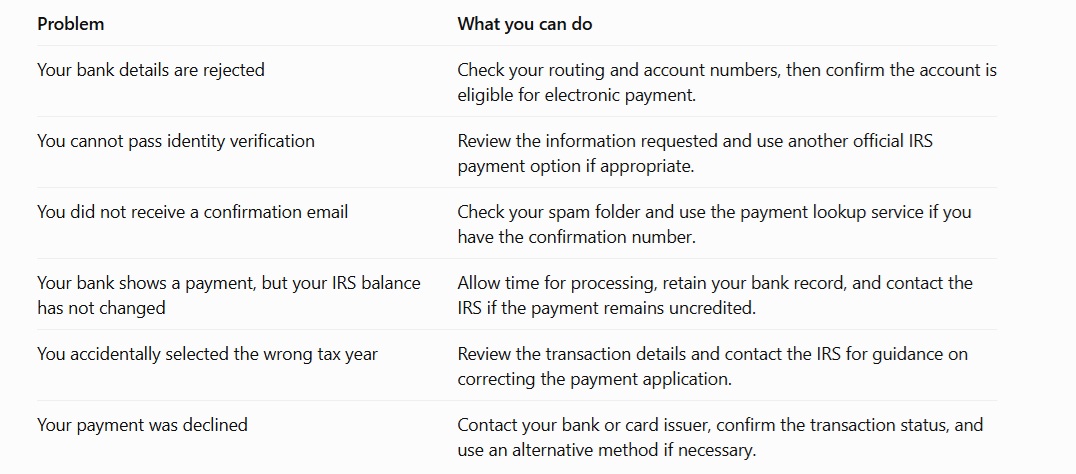
Important: If your payment deadline is approaching, do not assume that a failed or pending transaction satisfies your obligation. Check the status promptly and use an available official payment method if you need to make a replacement payment.
Is Paying Taxes Online Better Than Paying by Mail?
For many taxpayers, online payment is convenient because it can reduce paperwork and provide a transaction confirmation. However, the right choice depends on your needs.
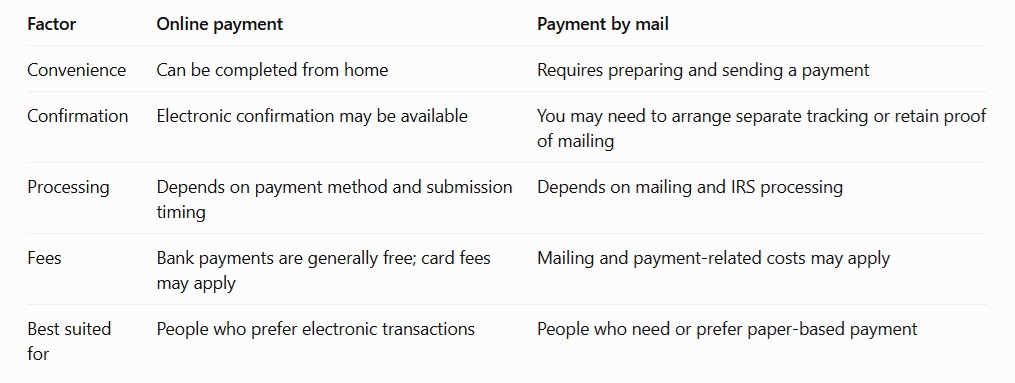
If you pay by mail, follow the instructions for your specific tax form or IRS notice. Use the correct payment address and include any required payment voucher.
For most eligible individual taxpayers who want to avoid card fees, a bank-account payment through Direct Pay is a practical starting point.
When Should You Consider Professional Tax Help?
Paying a tax bill online is usually manageable on your own. However, the situation can become more complicated when you have multiple years of unpaid taxes, unfiled returns, IRS collection notices, wage garnishments, tax liens, or questions about whether the amount assessed is correct.
A qualified tax professional may help you understand your options, communicate with the IRS when authorized, and determine which resolution approaches may fit your circumstances.
Depending on the issue, you might consider an enrolled agent, a certified public accountant (CPA), or a tax attorney. Their qualifications and areas of expertise differ, so choose someone whose experience matches your needs.
A tax attorney may be particularly relevant when a tax matter involves legal disputes, complex representation needs, or potential legal consequences.
For individuals and businesses dealing with back taxes, Resolve Federal Tax Group provides information about tax relief and tax resolution options. Before engaging any provider, ask about their qualifications, the services included, fees, and what outcomes can realistically be expected. No professional can guarantee that the IRS will approve a particular resolution.
Frequently Asked Questions
1. Can I pay my IRS taxes online for free?
Yes. Eligible individuals can generally use IRS Direct Pay to make supported payments from a bank account without a payment processing fee. Card payments and certain other methods may involve fees.
2. Can I pay my IRS tax bill online without an account?
Yes. IRS Direct Pay allows eligible individuals to pay from a bank account without signing in to an IRS Online Account. You will still need to complete the required identity verification.
3. Can I pay the IRS online using a credit card?
Yes. The IRS accepts many eligible tax payments through authorized third-party card processors. Processing fees apply, so check the current fee before completing your transaction.
4. Can I make an IRS payment online after the tax deadline?
Yes. You can generally make eligible payments after the deadline using an available IRS payment method. However, paying late does not automatically eliminate penalties or interest. If you have an outstanding balance, review your payment and tax relief options as soon as possible.
5. How do I know whether the IRS received my payment?
Save the payment confirmation number or email, review your bank or card statement, and use the applicable IRS payment lookup service or online account to check the transaction. Your tax balance may take time to update.
6. Can I pay only part of what I owe the IRS?
Yes, you can generally make a partial payment through an available method. However, the unpaid balance may continue to accrue penalties and interest, and a partial payment does not automatically establish a payment plan or stop collection activity.
7. Can I pay my IRS taxes online if I have a payment plan?
Yes. Depending on your arrangement and payment type, you may be able to make a scheduled or additional payment through your IRS Online Account or Direct Pay. Follow the instructions for your existing plan to ensure the payment is applied appropriately.
8. Can the IRS Fresh Start Program reduce my tax debt?
Some tax relief options associated with the Fresh Start Program may help eligible taxpayers manage their debt. A payment plan can spread payments over time, while an Offer in Compromise may settle eligible tax debt for less than the full amount. Approval depends on your circumstances and IRS requirements.
Conclusion
Paying your taxes online to the IRS is a convenient option for many individuals and businesses. The key is to choose an approved payment method, enter the correct tax information, review your details before submitting, and keep proof of payment.
If you cannot afford the full amount, do not assume that you have no options. Explore IRS payment plans, penalty relief, and an Offer in Compromise if appropriate. If you are dealing with complicated tax issues or collection activity, qualified professional guidance may help you understand the available next steps.